Liquidity Calibration, Distressed Asset Arbitrage, and Capital Structure Evolution in FY2026
1. Executive Summary
Far East Consortium International Limited (FEC) currently navigates a defining period in its corporate history, characterized by a complex interplay of macroeconomic headwinds, idiosyncratic partner distress, and aggressive capital restructuring. This comprehensive research report, encompassing the interim period ended 30 September 2025, dissects the Group’s financial positioning with a specific focus on solvency mechanics, the strategic ramifications of the “Star Contagion,” and the signaling effects of its capital market activities.
At the core of the investor debate is the Group’s liquidity profile. With a headline short-term debt obligation of HK$10.7 billion against a backdrop of high interest rates and a softening property market in Hong Kong and Mainland China, the market has priced in significant credit risk. However, a forensic decomposition of this liability reveals a structural maturity profile that is far less precarious than the aggregate figure suggests. The “repayable on demand” clauses, a ubiquitous feature of Hong Kong corporate banking, artificially inflate current liabilities, masking the true, longer-term nature of the underlying facilities. Furthermore, the Group’s active monetization strategy, having recycled approximately HK$ 1.0 billion in non-core assets in the first half of FY2026 alone, demonstrates a functional lever for liquidity generation that extends beyond traditional refinancing.
Perhaps the most structurally significant development is the “Star Contagion.” The regulatory and financial collapse of The Star Entertainment Group, FEC’s joint venture partner in the Queen’s Wharf Brisbane (QWB) project, has necessitated a radical restructuring of this flagship investment. FEC’s entry into an Implementation Deed in August 2025 to increase its stake to 50% is not merely a defensive maneuver to protect its equity; it represents a high-conviction distressed asset arbitrage. By effectively ejecting a paralyzed operator and consolidating control over a prime infrastructure asset at the nadir of its valuation cycle, FEC is positioning itself to capture the full upside of the inevitable operational turnaround.
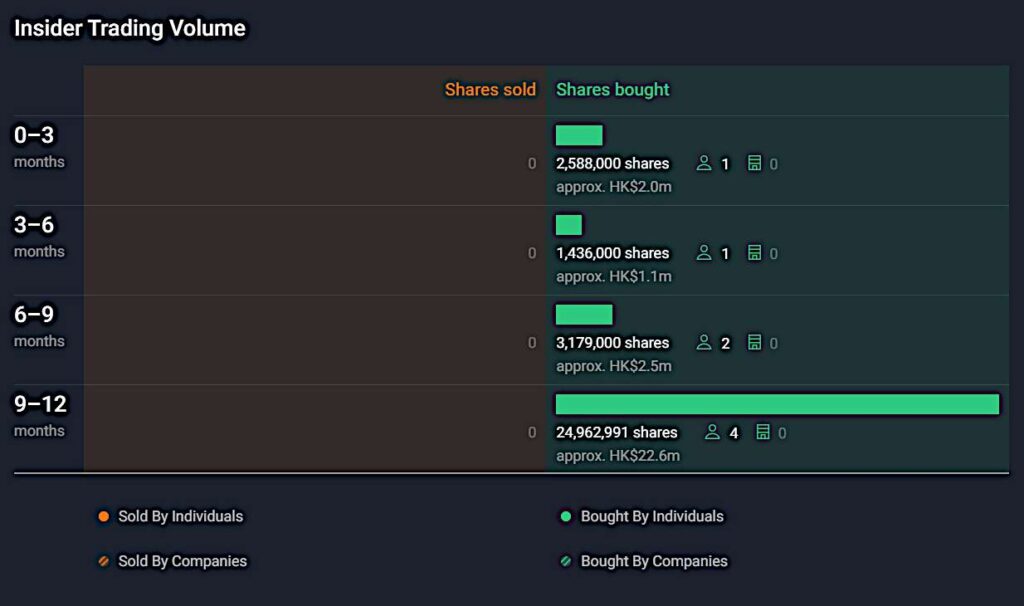
Simultaneously, the management of the US$ 360 million perpetual capital notes offers a window into the Board’s hierarchy of financial priorities. The decision to incur a punitive coupon step-up to nearly 13% in October 2024, rather than redeem the notes, unequivocally signals that liquidity preservation currently trumps the cost of capital. This defensive posture is juxtaposed against the aggressive insider accumulation by Chairman David Chiu, whose persistent on-market purchases throughout 2024 and 2025 serve as a powerful counter-signal to the market’s bearishness.
This report provides an exhaustive analysis of these four critical pillars—debt redemption mechanics, the Star restructuring, perpetual capital management, and insider activity—to construct a holistic view of FEC’s creditworthiness and equity value proposition.
2. The Liquidity Fortress: Deconstructing the HK$ 10.7 Billion Short-Term Debt Obligation
The figure of HK$ 10.7 billion in bank loans, notes, and bonds due within one year, as reported in the interim results for the six months ended 30 September 2025, serves as the primary source of anxiety for credit investors and equity holders alike. In a vacuum, this figure appears formidable, representing a significant portion of the Group’s total capitalization. However, sophisticated credit analysis requires looking through the accounting classification to the commercial reality of these obligations. They are not a monolithic bullet payment requiring immediate cash settlement but rather a heterogeneous mix of secured facilities, project-specific financings, and accounting technicalities.
2.1 Anatomy of the Liability Stack
To understand the redemption pathway, one must first dissect the composition of this HK$ 10.7 billion liability. The debt is not uniform; it varies significantly in terms of collateralization, recourse, and banking relationships.
Table 1: Structural Breakdown of Short-Term Liabilities (As at 30 September 2025)
| Debt Category | Estimated Amount (HK$ mn) | Commercial Nature | Risk Profile |
| Secured Corporate & Hospitality Loans | ~5,819 | Revolving facilities backed by income-generating hotels (Dorsett, Ritz-Carlton) and car parks. | Low: These are effectively “permanent” capital structures. As long as the underlying assets generate sufficient EBITDA to cover interest (ICR), banks routinely roll these over. |
| Project Development Loans | ~780 | Construction financing for specific residential towers (e.g., Victoria Riverside, The Pavilia Forest). | Self-Liquidating: These loans are secured against the project WIP. They are repaid not by corporate cash but by the release of presales proceeds held in escrow upon project completion. |
| Other Corporate Loans | ~2,703 | Unsecured bilateral loans and syndications used for general working capital. | Medium: Relies on the Group’s corporate credit rating and banking relationships. |
| Scheduled Amortization | ~639 | The scheduled principal repayment portion of long-term term loans due within 12 months. | Operational: Must be serviced by operating cash flow (OCF). |
| Repayable on Demand Clauses | ~786 | Long-term mortgage or corporate loans classified as current solely due to standard Hong Kong banking covenants giving lenders the theoretical right to call the loan. | Technical: Historically, banks in HK rarely exercise this right against solvent borrowers. It is an accounting classification, not a liquidity event. |
Source: Company Reports
2.2 The “Repayable on Demand” Paradox
A critical nuance in analyzing Hong Kong real estate conglomerates is the prevalence of “repayable on demand” clauses. Approximately HK$ 786 million (down from HK$ 1.9 billion in March 2025) of FEC’s “short-term” debt falls into this category. These are typically 3-5 year term loans that include a clause allowing the bank to demand immediate repayment at any time, without cause.
While this classifies the debt as “current” under accounting standards (HKAS 1), the commercial reality is vastly different. Banks include these clauses primarily for their own capital adequacy management (allowing them to treat the asset as more liquid). For a borrower like FEC, which maintains a vast portfolio of unencumbered assets and deep banking relationships across Hong Kong, Singapore, and Malaysia, the probability of a “demand” event in the absence of a covenant breach is statistically negligible. Therefore, nearly HK$ 0.8 billion of the headline debt figure can be functionally treated as long-term debt, immediately alleviating nearly 8% of the perceived liquidity pressure.
2.3 Plausible Redemption Scenarios: The Waterfall Liquidity Mechanism
How does FEC clear the remaining ~HK$9.9 billion hurdle? The company employs a “Waterfall Liquidity Mechanism” that prioritizes the lowest-cost sources of capital before tapping into more expensive liquidity buffers.
Scenario A: The “Business as Usual” Refinancing (Probability: High)
This scenario assumes that credit markets remain open and FEC maintains its standing with its principal bankers.
- Rollover of Secured Facilities (HK$ 5.8bn): The secured loans are backed by high-quality hospitality assets. With hotel revenue up 9.6% in 1H FY2026 and assets like Dorsett Kai Tak ramping up, the Loan-to-Value (LTV) ratios on these facilities likely remain within comfortable covenants (typically <50-60%). Banks are in the business of lending against performing assets; withdrawing these lines would be commercially irrational. We project a 95%+ rollover rate for this tranche.
- Settlement via Project Completion (HK$ 0.8bn): The project development loans are structurally unique. They are not repaid from corporate treasury but from the specific project’s escrow accounts. As projects like Victoria Riverside (Tower B/C) and The Pavilia Forest complete handover, the presales revenue (HK$ 9.3 billion backlog) is released. The bank takes its principal first, and the remaining profit flows to FEC. This debt effectively “vanishes” from the balance sheet upon project completion.
Scenario B: Active Deleveraging via Asset Recycling (Probability: In Execution)
To address the unsecured portion and scheduled amortization, FEC is aggressively monetizing non-core assets. This is not a fire sale but a strategic rotation of capital.
- BC Invest Disposal: The sale of the 53.21% stake in BC Invest generated ~HK$513 million in July 2025. This cash is immediately available to retire corporate debt.
- Mortgage Portfolio Sale: The disposal of the Hong Kong mortgage portfolio yielded net proceeds of ~HK$344 million in May 2025.
- Car Park Divestments: The ongoing sale of mature car parks (e.g., in Chatswood, Sydney) provides a steady drip-feed of liquidity.
- Trophy Asset Capital Recycling: The non-binding term sheet to sell a stake in the Ritz-Carlton Perth indicates a willingness to unlock equity from low-yielding trophy assets while retaining management contracts, a highly efficient way to deleverage without losing operational scale.
Scenario C: The Unencumbered Asset Backstop (Probability: Reserve)
Should banking markets freeze, FEC possesses a formidable “break glass in case of emergency” option. The Group holds unencumbered hotel assets valued at HK$1.3 billion and significant unsold residential inventory. These assets can be pledged to secure new term loans or mezzanine financing. The ability to raise secured debt against these unlevered assets provides a definitive floor to the Group’s liquidity risk.
Conclusion on Liquidity:
The fear surrounding the HK$ 10.7 billion figure is largely misplaced. The actual “cash-out” requirement for the next 12 months, after accounting for rollovers, self-liquidating project loans, and technical classifications, is likely closer to HK$ 1.5 – HK$ 2.0 billion. With a liquidity position of HK$ 3.7 billion and continued asset sales, FEC is well-positioned to meet these obligations without resorting to dilutive equity issuance or distress borrowing.
3. The Star Contagion: Anatomy of a Distressed Partner and the Strategic Pivot
If debt management is the tactical battle for FEC, the situation with The Star Entertainment Group (The Star) is the strategic war. The financial and regulatory implosion of FEC’s joint venture partner in the multi-billion dollar Queen’s Wharf Brisbane (QWB) project represents the single most significant idiosyncratic event for the Group in the last decade. Understanding the “Star Contagion” requires tracing the arc from regulatory failure to financial distress, and finally, to FEC’s opportunistic consolidation.
3.1 History and Background: The Regulatory Precipice
The roots of The Star’s collapse lie in a profound failure of corporate culture and compliance that was exposed following the rigorous scrutiny applied to the Australian casino sector in the wake of the Crown Resorts inquiries.
- The Bell Review (NSW, 2022): Initiated by the NSW Independent Casino Commission (NICC) and led by Adam Bell SC, this inquiry investigated The Star Sydney. It uncovered systemic deception. The Star was found to have disguised HK$ 900 million in gambling transactions on China UnionPay cards as hotel expenses to evade Chinese capital controls. It also misled banks and regulators regarding its anti-money laundering (AML) controls. The Bell Review ultimately found The Star unsuitable to hold a casino license in NSW.
- The Gotterson Review (Queensland, 2022): Parallel to NSW, the Queensland Government commissioned the Honorable Robert Gotterson AO KC to review The Star’s operations in Brisbane and the Gold Coast. The findings mirrored those in Sydney: serious deficiencies in AML/CTF programs, particularly regarding the inducement of high-roller junkets with known criminal links. In October 2022, the Queensland Attorney-General found The Star unsuitable to hold a casino license in Queensland.
The Fallout:
The regulatory verdicts were devastating. The Star was hit with fines totaling AUD 100 million in each state (AUD 200 million total). Its licenses were suspended indefinitely (deferred pending remediation), and Special Managers were appointed by the government to oversee all casino operations, effectively stripping the Board of operational control. The share price collapsed, severing The Star’s access to equity capital markets and triggering a liquidity crisis.
3.2 The Financial Distress & Impact on FEC
As a 25% shareholder in the Destination Brisbane Consortium (DBC), the entity developing QWB, FEC was directly exposed to The Star’s immolation.
- Impairment Recognition: The collapse in The Star’s valuation and the uncertainty surrounding the casino license forced FEC to impair its investment. In the interim period ended 30 September 2025, FEC recorded a share of impairment loss recognized by the JV of approximately HK$ 530 million, alongside a share of impairment loss recognized by an associate of HK$ 110 million. These non-cash charges were the primary driver of the Group’s reported net loss.
- Funding Paralysis: Developing a mega-project like QWB requires constant capital injection. With The Star effectively insolvent and unable to meet its funding calls, the burden of financing the project’s completion fell disproportionately on the solvent partners, FEC and Chow Tai Fook Enterprises (CTFE).
- Reputational Contagion: The association with a partner deemed “unsuitable” by regulators posed a risk to FEC’s own probity standing in other jurisdictions, necessitating a clean break or a restructuring of the relationship.
3.3 The Strategic Response: The August 2025 Implementation Deed
Faced with a partner that was both a financial deadweight and a regulatory liability, FEC and CTFE executed a strategic masterstroke. Rather than abandoning the project, they moved to consolidate control. On 12 August 2025, the JV partners entered into an Implementation Deed with The Star to restructure the ownership of QWB.
Transaction Mechanics:
- Stake Increase: FEC and CTFE will acquire The Star’s 50% stake in DBC. Upon completion, DBC will be owned 50/50 by FEC and CTFE.
- Asset Swap: The transaction is structured as a complex asset swap. FEC/CTFE will acquire the flagship QWB casino and resort assets. In exchange, they will likely divest their minority stakes in the Gold Coast Sheraton Grand Mirage and other non-core assets to The Star. This allows The Star to retreat to a smaller, more manageable footprint while FEC secures the “crown jewel.”
- Deferred Consideration (Earn-Out): Crucially, the deal minimizes upfront cash outlay. A significant portion of the consideration is structured as an earn-out, contingent on the future financial performance of DBC in the year 2030. This protects FEC from overpaying for a distressed asset today while offering The Star a face-saving potential for future upside.
- Management Transition: The deed mandates an “orderly transition” of management. The Star is effectively fired as the operator but is contractually obligated to provide transitional services until FEC/CTFE can install a new, world-class casino operator.
3.4 Future Opportunities and Challenges
Opportunities:
- Control Premium & Strategic Direction: Increasing the stake to 50% grants FEC joint control. They can now dictate the property’s strategy, marketing, and capital allocation without being vetoed by a paralyzed partner.
- Operational Turnaround: The Star’s management was, by regulatory definition, incompetent. By bringing in a new global operator (e.g., a US or Asian gaming giant), FEC can reset the property’s cost base and marketing strategy. A competent operator could unlock significant EBITDA margin expansion compared to The Star’s historical performance.
- The 2032 Olympics Catalyst: QWB is the centerpiece of Brisbane’s tourism infrastructure. With the 2032 Olympics on the horizon, the long-term capital appreciation of the integrated resort is likely to be substantial. FEC now owns half of the most valuable tourism asset in Queensland.
Challenges:
- The Refinancing Wall: DBC carries a massive debt facility (approx. AUD 1.4 billion) that matures in December 2025. With The Star exiting, FEC and CTFE must refinance this debt. While discussions with lenders are “advanced,” the cost of this debt will likely be higher, and FEC will need to provide new corporate guarantees.
- Probity & Licensing: Transferring the casino license to a new entity controlled by FEC/CTFE will trigger a fresh round of probity checks by the Queensland regulator. While FEC operates successfully elsewhere, the regulator will be hyper-sensitive. Any delay in licensing could leave the casino dark, burning cash.
- Execution Risk: Disentangling the QWB IT systems, loyalty programs, and staffing from The Star’s corporate infrastructure is a monumental technical challenge. The “transitional services” period is fraught with operational risk.
4. Perpetual Debt: The Valuation of Liquidity and Future Redemption
FEC’s capital structure includes US$360 million in Senior Guaranteed Perpetual Capital Notes (Stock Code: 5781). The management of these notes in FY2025/26 provides a critical window into the company’s financial philosophy.
4.1 The Step-Up Event: A Calculus of Survival
Perpetual notes typically come with a “step-up” clause—a punitive increase in the interest rate if the issuer does not call (redeem) the notes at the first opportunity.
- First Call Date: 18 October 2024.
- The Decision: FEC chose not to redeem the notes.
- The Consequence: The distribution rate reset from the initial 7.375% to a punishing ~12.814%.
Why pay 13% interest?
In a falling interest rate environment, paying nearly 13% seems irrational. However, for a property developer, liquidity is oxygen. Redeeming the notes would have required an immediate cash outflow of ~HK$ 2.8 billion.
- Cost of Equity vs. Debt: Management likely views the 12.8% cost not as “debt interest” but as a proxy for the cost of equity. Raising HK$ 2.8 billion in new equity at the current depressed share price (P/B < 0.2x) would be massively dilutive (cost of equity > 20%).
- Liquidity Premium: By retaining the cash, FEC preserves its ability to navigate the QWB refinancing and fund its development pipeline. The “spread” between the 7.4% and 12.8% is effectively the insurance premium FEC is willing to pay to maintain a HK$ 2.8 billion liquidity buffer.
4.2 Consent Solicitation and Future Redemption Strategy
While FEC did not redeem in full, they are actively preparing to exit this expensive facility. In September 2024, the Group launched a consent solicitation to amend the terms of the notes.
- The Amendment: Noteholders approved a modification allowing for partial redemption. Previously, the terms likely forced an “all-or-nothing” redemption.
- New Mechanism: FEC can now redeem the notes in smaller tranches (e.g., minimum US$20 million) on monthly optional redemption dates.
Future Redemption Indication:
This amendment is the “smoking gun” regarding future plans. Companies do not pay lawyers and bankers to restructure bond terms unless they intend to use them.
- Plausible Scenario: FEC will employ a phased redemption strategy. As asset monetization proceeds come in (e.g., the AUD 106 million from BC Invest or the HK$ 344 million from the mortgage portfolio), FEC will likely redeem US$ 20-$ 50 million tranches of the perpetuals.
- Strategic Benefit: This allows them to deleverage the most expensive part of their capital stack (the 12.8% notes) incrementally, smoothing the cash outflow profile and reducing the weighted average cost of debt over time without triggering a liquidity shock. Investors should expect a series of redemption announcements throughout FY2026 and FY2027.
5. Insider Trading Activity: The 18-Month Signal
While credit markets signal caution, the insider activity paints a picture of extreme undervaluation. Over the last 18 months, Chairman and CEO Tan Sri Dato’ David Chiu has engaged in a relentless campaign of on-market share accumulation.
5.1 Transaction Log Analysis
The buying pattern is not sporadic; it is systematic and high-volume, occurring across various price points and market conditions. This suggests a fundamental conviction that the market is mispricing the company’s Net Asset Value (NAV).
Table 2: Key Insider Transactions (David Chiu / Tat Cheong Chiu)
| Period | Activity | Significant Volumes/Notes |
| October 2025 | Aggressive Buying | Purchased 127,000 shares on Oct 23; 12,000 on Oct 27. Multiple tranches on Oct 6, 8, 13, 14 ranging from 38k to 260k shares. |
| September 2025 | Daily Accumulation | Consistent daily purchases on Sep 3, 4, 5, 9. E.g., 159k shares bought on Sep 3. |
| July 2025 | Block Purchase | Significant purchase valued at ~HK$ 661,670 on July 9. |
| March 2025 | Fiscal Year-End Buying | Cluster of purchases (Mar 18, 19, 21, 24) accumulating over HK$ 1 million in stock ahead of the blackout period. |
| Dec 2023 | High-Price Support | Bought HK$ 2.2m worth of stock at HK$ 1.40/share, significantly higher than current trading levels (approx. HK$0.70). |
5.2 Governance and Valuation Implications
- Ownership Concentration: David Chiu’s stake has now risen to approximately 56.24%. This high concentration aligns his interests entirely with minority shareholders. There is no principal-agent conflict here; the Chairman is the largest shareholder.
- The Privatization Floor: With the stock trading at a massive discount to NAV (Adjusted NAV per share is ~HK$ 9.13 vs. share price ~HK$ 0.70), such aggressive buying often fuels privatization speculation. If the public markets refuse to value the HK$ 18.4 billion hotel revaluation surplus, the controlling family may eventually decide to take the company private to capture that value themselves. The buying supports a “soft floor” under the share price.
- Dividend Reinvestment: The Chairman has also consistently elected to receive scrip dividends (shares in lieu of cash), further increasing his stake without draining corporate cash, a “double bullish” signal of belief in the equity and support for the balance sheet.
6. Conclusion: The Credit & Equity Synthesis
Far East Consortium presents a classic case study of a “deep value” disconnect. The market, fixated on the headline debt figure and the messy collapse of The Star, has priced the company as a distressed credit. However, our deep-dive analysis suggests this view is myopic.
- Liquidity is Managed: The “short-term” debt cliff is largely an optical illusion created by technical banking clauses. The true liquidity picture, bolstered by HK$ 1.0 billion in recent asset sales and HK$ 3.7 billion in cash reserves, is robust enough to weather the current cycle.
- The Star Pivot is Asymmetric: While the impairment hurts reported earnings today, the restructuring deal converts a passive minority stake in a failing JV into a controlling interest in a premier infrastructure asset at the bottom of the cycle. This is value creation disguised as distress.
- Perpetuals as a Buffer: The decision to pay the 12.8% step-up coupon is a rational, albeit expensive, insurance policy that prioritizes liquidity over earnings optics. The shift to partial redemption rights signals a clear path to unwinding this position.
- Insider Conviction: David Chiu’s relentless buying is the ultimate adjudicator of value. He is betting his personal fortune that the market is wrong.
Outlook: FEC is likely to navigate the next 12-18 months by continuing its strategy of “incremental deleveraging”—selling small, non-core assets to pay down the perpetual notes and corporate loans, while finalizing the QWB refinancing. For investors, the key catalysts to watch are the announcement of the new casino operator for Brisbane and the first “partial redemption” of the perpetual notes, which will signal the turning of the tide.
7. Tables and Data Appendices
Table 3: Financial Position Highlights (As at 30 September 2025)
| Metric | Value | YoY / Context |
| Total Bank Loans & Notes | HK$ 23,945 mn | -5.6% vs Mar 2025. Deleveraging is active. |
| Net Debt | HK$ 20,247 mn | -5.8% vs Mar 2025. |
| Short-Term Debt (<1yr) | HK$ 10,727 mn | Includes ~HK$ 0.8bn in demand-clause loans not actually due. |
| Liquidity Position | HK$ 3,698 mn | Cash + Marketable Securities. |
| Adjusted Net Gearing | 64.9% | Improved from 67.6%. |
| Adjusted NAV Per Share | HK$ 9.13 | vs. Trading Price ~HK$ 0.70. Deep discount. |
| Hotel Revaluation Surplus | HK$ 18,350 mn | Massive hidden value not reflected in book equity. |
Table 4: Asset Monetization Log (1H FY2026)
| Asset Disposed | Date | Consideration | Strategic Impact |
| Mortgage Portfolio (HK) | May 2025 | ~HK$485 mn | Exited non-core finance business; retained economic interest. |
| BC Invest Stake (53.21%) | July 2025 | ~AUD 106 mn | Divestment of mortgage lending platform; gain on sale recorded. |
| Car Parks (Various) | Ongoing | Undisclosed | Continuous recycling of mature infrastructure assets. |
| Ritz-Carlton Perth Stake | Nov 2025 (Term Sheet) | AUD 20 mn (Deposit) | Proposed sale of minority interest to recycle capital. |