Purchasing H-shares of China CITIC Bank (0998.HK) for my Dividend Income Portfolio

China CITIC Bank - Share Valuation

Summary

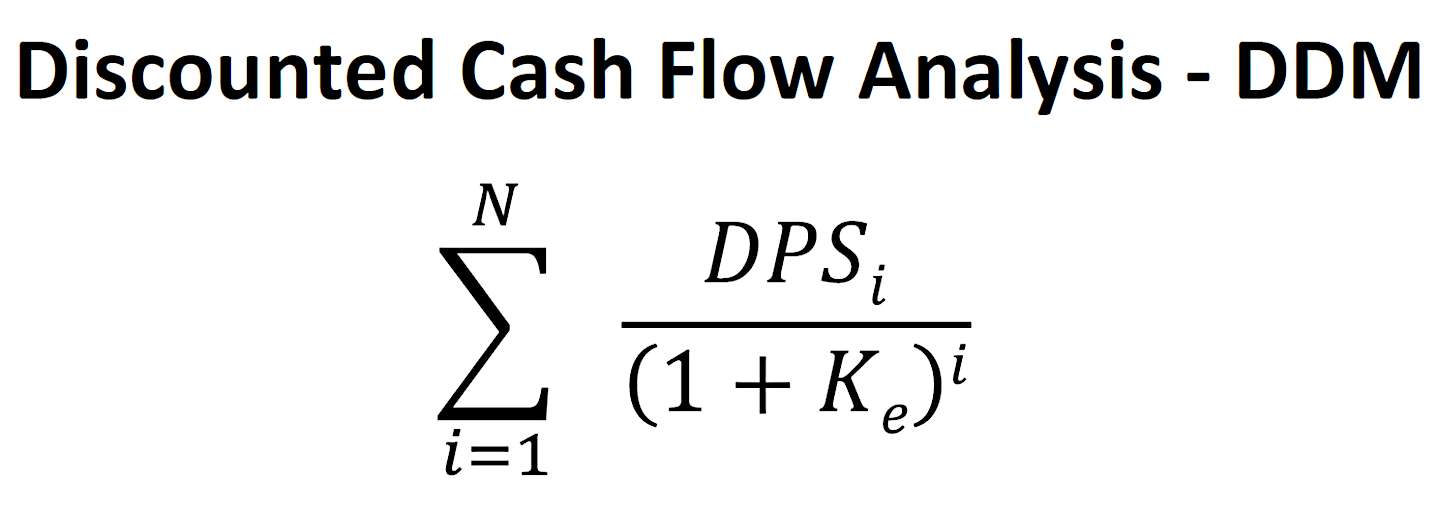
In this article, I examine the valuation of the H-share of China CITIC Bank (0998.HK) from the view point of a Dividend Investor. The Dividend Discount Model (DDM) is used to determine its Intrinsic Value, Expected Return on Investment, and its Margin of Safety. DDM is a form of Discounted Cash Flow Analysis in which the type of cash flow used in the analysis is the Company’s regular dividend payments, discounted at the appropriate rate of return to determine the Intrinsic Value of the stock.

Introduction

The recent Evergrande debt crisis has resulted in a substantial sell down in the Hong Kong equities market, with the bulk of the price decline hitting China H-shares. A few companies on my watch list experienced price corrections which brought them into value stock territory, at least that is my humble opinion. I have recently published articles on 2 of them, namely Ping-An Insurance, Agricultural Bank of China. In this article, I would like to share my thoughts on another recent addition to my Dividend Income Portfolio, China Citic Bank (0998.HK).

As my investment philosophy evolves over time, I find myself favoring stocks which provide attractive dividends at inexpensive valuations. I used the following set of questions to help determine the Bank’s investment worthiness:

  • Does the Bank have a good long-term dividend track record?
  • Does the Bank currently offer an attractive dividend yield (above the average yield of Hang Seng Index constituents)?
  • Is the current payout ratio safe and sustainable?
  • What is the expected return on investment of the share over a 10-year period? Majority of recommendations by financial analysts have a 12 month time horizon. I find the 10-year period to be more suitable for a dividend income stock, especially one which is part of a retirement dividend income portfolio.
  • Does the stock price offer a sufficient margin of safety to its intrinsic value?
  • Are the shares considered attractive when measured against the traditional value investing yardsticks? A good dividend stock with inexpensive valuation will minimize the risk of capital impairment and increase the probability of capital gains.
  • Does the stock have a history of consistent earnings growth?

With the above questions in mind, let us delve into the analysis of the company to find the answers.

Read more

Estimating the Intrinsic Value, Return on Investment and Margin of Safety of Ping An using the Dividend Discount Model

Ping An - Share Valuation

Summary

This article looks at the valuation of Ping An shares trading on the Stock Exchange of Hong Kong (Ticker: 2318.HK). The Dividend Discount Model is used to estimate the share’s Intrinsic Value, Expected Return on Investment, and its Margin of Safety.

Continue reading to learn more.

Introduction

Ping An - 3rd Largest Insurance Company in the world
Ping An – 3rd Largest Insurance Company in the world by market capitalization

Ping An is the 3rd largest insurance company in the world by market capitalization and by the same measure, is the largest insurance company in Mainland China. Ping An has its humble beginning in Shenzhen when it was founded in 1988 at China’s first joint-stock company. Since then, its business has grown by leaps and bounds and it has diversified into other profitable business ventures, including fin-tech and banking. The company was successfully listed on the Stock Exchange of Hong Kong on 24th June 2004.

Ping An shares hit its 52-week high on the Hong Kong Stock Exchange in January this year. Since that price top, the share has undergone a prolonged correction, culminating in its recent 52-week low 49.00HK$ per share on 21st September 2021. All in all, the share price has declined more than 50% from its year high.
Such a massive correction in one of the largest insurance companies in the world has certainly attracted the attention of many in the investment community. The time is right to have a closer look at the current valuation of Ping An (2318.HK) shares trading on the Stock Exchange of Hong Kong.

Dividend Discount Model is one of many methods for valuing stocks. The procedure is similar to the Discounted Cash Flow model, with the free cash flow being substituted dividends as the cash flowing to the investor. One advantage of using this method is that dividends data are easily available from the company’s financial reports. It is also my preferred valuation method for dividend-paying stocks. The reason being that dividends are tangible income to the investor and it represents the return of investment and return on investment. The cash from dividends allows the investor to reinvest the proceeds into the same stock or into other more attractive stocks to achieve the all important compounding effect.

This article describes the use of the Dividend Discount Model to determine the Intrinsic Value, Expected Return on Investment, and Margin of Safety of Ping An (2318.HK) shares trading on the Stock Exchange of Hong Kong.

Read more

Purchasing H-shares of Agricultural Bank of China (1288.HK) for my Dividend Income Portfolio

Agricultural Bank of China Share Valuation Intrinsic Value

Summary

In this article, I examine the valuation of the H-share of Agricultural Bank of China (ABC 1288.HK) through the eyes of a Dividend Investor. Dividend Cash Flow analysis was used to assess the H-share of Agricultural Bank of China. The Dividend Discount Model was employed to determine its Intrinsic Value, Expected Return on Investment, and its Margin of Safety.
Continue reading to learn more.

Introduction

Following on from my previous article on the H-shares of the China Construction Bank (CCB), I recently purchased the H-shares of the Agricultural Bank of China (ABC). In this article, I would like to discuss the reasons why I decided to add the shares to my Dividend Income Portfolio.

As my investment philosophy evolves over time, I find myself favoring stocks which provide attractive dividends at inexpensive valuations. I used the following set of questions to help determine the Bank’s investment worthiness:

  • Does the Bank have a good long-term dividend track record?
  • Does the Bank currently offer an attractive dividend yield (above the average yield of Hang Seng Index constituents)?
  • Is the current payout ratio safe and sustainable?
  • What is the expected return on investment of the share over a 10-year period? Majority of recommendations by financial analysts tend to have a 12 month time horizon. I find the 10-year period to be more suitable for a dividend income stock, especially one which is part of a retirement dividend income portfolio.
  • Does the stock price offer a sufficient margin of safety to its intrinsic value?
  • Are the shares considered attractive when measured against the traditional value investing yardsticks? A good dividend stock with inexpensive valuation will minimize the risk of capital impairment and increase the probability of capital gains.
  • Does the stock have a history of consistent earnings growth?

With the above questions in mind, let us delve into the analysis of the stock to find the answers.

Read more

Estimating the Intrinsic Value, Return on Investment and Margin of Safety of Alibaba based on Discounted Earnings Model.

Alibaba Discounted Earnings Model - Intrinsic Value, Return on Investment, Margin of Safety

Summary

This article looks at the valuation of Alibaba shares trading on the Stock Exchange of Hong Kong (Ticker: BABA-SW (9988.HK). The Discounted Earnings Model is used to estimate the share’s Intrinsic Value, Expected Return on Investment, and its Margin of Safety.

Introduction

The past year has been a tumultuous one for Alibaba. Starting with the suspension of Ant Financial’s 37 billion US$ IPO in November 2020, the company has just been hit with one bad news after another. In April this year, China’s Antitrust Regulator slapped Alibaba with a record breaking fine of 18.4 billion RMB for abusing its monopoly position in the e-commerce industry. In recent days, there have been reports that the Chinese Government is considering breaking up Ant Financial’s Alipay online payment app and splitting the loan business into a separate app.All the bad news has culminated in the sharp decline of Alibaba’s share price, which has fallen 48% from its 52 week high of 309.40HK$.

Such a massive correction in one of the best e-commerce companies in the world has certainly attracted the attention of many in the investment community. Legendary value investors Charlie Munger and Monish Pabrai have reportedly invested in Alibaba shares earlier this year. The time is right to have a closer look at the current valuation of Alibaba shares trading on the Stock Exchange of Hong Kong. Discounted Earnings Model is one of many methods for valuing stocks. The procedure is similar to the Discounted Cash Flow model, with the free cash flow being substituted with earnings or net income. One advantage of using this method is that earnings data are easily available from the company’s financial reports.
This article describes the use of the Discounted Earnings Model to determine the Intrinsic Value, Expected Return on Investment, and Margin of Safety of Alibaba shares trading on the Stock Exchange of Hong Kong (Ticker: BABA-SW (9988.HK).

Read more

I purchased H-shares of the China Construction Bank (CCB) for my Dividend Income Portfolio. Here are the reasons why.

Summary

In this article, I take a deep look at the stock valuation of the H-share of China Construction Bank (CCB 0939.HK) through the eyes of a Dividend Investor. Dividend Cash Flow analysis was used to evaluate the H-share of China Construction Bank. The Dividend Discount Model was employed to estimate its Intrinsic Value, Expected Return on Investment, and its Margin of Safety.
Continue reading to learn more.

Introduction

Following my previous article on the H-shares of the Bank of China (BOC), I also recently purchased the H-shares of the China Construction Bank (CCB). Here, I would like to discuss the rationale behind the investment decision to add China Construction Bank to my dividend income portfolio.

As my investment philosophy evolves over time, I find myself preferring stocks which provide attractive dividend income streams at inexpensive valuations. I used the following set of questions to help determine the investment worthiness of China Construction Bank:

  • Does the stock have a good long-term dividend track record?
  • Does the stock currently offer an attractive dividend yield (above the average yield of Hang Seng Index constituents)?
  • Is the current payout ratio of China Construction Bank sustainable?
  • What is the expected return on investment of China Construction Bank over a 10-year period? Majority of recommendations by financial analysts tend to have a 12 month time horizon. I find the 10-year period to be more suitable for a dividend income stock, especially one which is part of a retirement dividend income portfolio.
  • Does the stock price offer a sufficient margin of safety to its intrinsic value?
  • Are the H-shares of China Construction Bank (CCB) considered attractive when measured against the traditional value investing yardsticks? A good dividend stock with inexpensive valuation will minimize the risk of capital impairment and increase the probability of capital gains.
  • Does the stock have a history of consistent earnings growth?

With the above questions in mind, let us delve into the analysis of the stock to find the answers.

Read more

Dividend Investing – How to use Discounted Cash Flow Analysis to value Dividend Stocks

Discounted Cash Flow Analysis, Dividend Discount Model

What is Discounted Cash Flow Analysis (DCA)?

Discounted Cash Flow Analysis or DCA is one of the best methods to estimate the worth of an investment. In DCA, the value of an investment is determined by the sum of its future cash flows discounted back to present value at an appropriate discount rate or a required rate of return for the investor.

What is the Discounted Cashflow Model (DDM)?

For dividend paying stocks, the type of cash flow used in the analysis is the stock’s regular dividend payments and the Dividend Discount Model (DDM) Cash Flow Analysis is used to determine the Intrinsic Value of the stock.

There are 2 types of future cash flows which determine the Intrinsic Value of a Dividend Stock:

  • Future regular dividend payments over the Holding Period
  • Expected Future Stock Price at the end of the holding period
    • Depending on whether there is capital appreciation in the stock price over the holding period, this cashflow can either add or substract from the Intrinsic Value of the stock.

These two cash flow components, when discounted back to the present value at the appropriate discount rate, determine the Intrinsic Value of the Dividend Stock.

Read more

Broker Recommendations and Target Prices for the H-share of the Bank of China (BOC)

Bank of China Logo

Introduction

In a previous article, I laid out the reasons why I added the H-share of the Bank of China (BOC) to my dividend income portfolio. In the same article I also described the discounted cash flow analysis which I used to estimate the intrinsic value of Bank of China (BOC) H-share, which worked out to be 4.207HK$ per share.

Not long after the article was posted on my blog, I came across a piece of news article on AAStocks.com which provided a summary of the latest Brokers’ Recommendations and Target Prices for Bank of China H-share (3988.HK).

Read more

I purchased H-shares of the Bank of China (BOC) for my Dividend Income Portfolio. Here are the reasons why.

Bank of China Logo

Summary

In this article, I examine the stock valuation of the H-share of Bank of China (BOC 3988.HK) through the eyes of a Dividend Investor. Dividend Cash Flow analysis was used to evaluate Bank of China’s H-share (BOC 3988.HK). The Dividend Discount Model was employed to calculate the H-share Intrinsic Value, Expected Return on Investment, and its Margin of Safety.
Continue reading to learn more.

Introduction

Following my previous article on the H-shares of the Industrial and Commercial Bank of China (ICBC), I also recently purchased the H-shares of the Bank of China (BOC). Here, I would like to discuss the rationale behind the investment decision to add the H-shares of BOC for my dividend income portfolio.

Over the years, my approach to investing has evolved from the speculative growth and momentum style to a more conservative method, preferring stocks which provide attractive dividend income streams at inexpensive valuations. I used the following set of questions to help determine the investment worthiness of the H-share of the Bank of China (BOC):

  • Does the Bank of China (BOC) have a good long-term dividend track record?
  • Does the Bank of China (BOC) currently offer an attractive dividend yield (above the average yield of Hang Seng Index constituents)?
  • Is the current payout ratio of the Bank of China (BOC) sustainable?
  • What is the expected return on investment of the Bank of China (BOC) over a 10-year period? Majority of recommendations by financial analysts tend to have a 12 month time horizon. I find the 10-year period to be more suitable for a dividend income stock, especially one which is part of a retirement dividend income portfolio.
  • Does the H-share of the Bank of China (BOC) offer a sufficient margin of safety to the intrinsic value of the stock?
  • Are the H-shares of the Bank of China (BOC) considered attractive when measured against the traditional value investing yardsticks? A good dividend stock with inexpensive valuation will minimize the risk of capital impairment and increase the probability of capital gains.

With the above questions in mind, let us delve into the analysis of the Bank of China (BOC) to find the answers.

Read more

Broker Recommendations and Target Prices for the H-share of the Industrial and Commercial Bank of China (ICBC)

ICBC Logo

Introduction

In a previous article, I laid out the reasons why I added the H-share of the Industrial and Commercial Bank of China (ICBC) to my dividend income portfolio. In the same article I also described the discounted cash flow analysis which I used to estimate the intrinsic value of ICBC H-share, which worked out to be 5.83HK$ per share.

Not long after the article was posted on my blog, I came across a piece of news article on AAStocks.com which provided a summary of the latest Brokers’ Recommendations and Target Prices for ICBC H-share (1398.HK).

Read more

I purchased H-shares of the Industrial and Commercial Bank of China (ICBC) for my Dividend Income Portfolio. Here are the reasons why.

ICBC Logo

Summary

In this article, I examine the stock valuation of the H-share of the Industrial and Commercial Bank of China (ICBC 1398.HK) through the eyes of a Dividend Investor. Dividend Cash Flow analysis was used to evaluate ICBC’s H-share (1398.HK). The Dividend Discount Model was employed to calculate the H-share Intrinsic Value, Expected Return on Investment, and its Margin of Safety.
Continue reading to learn more.

Introduction

In a previous article, I looked at certain China H-shares as good investment candidates for dividend income. Since then, I have invested in some of the same companies discussed in that article, including the H-share of the Industrial and Commercial Bank of China (ICBC). Here, I would like to discuss the rationale behind the investment decision to purchase the H-shares of ICBC for my dividend income portfolio.

Over the years, my approach to investing has evolved from the speculative growth and momentum style to a more conservative method, preferring stocks that provide attractive dividend income streams at inexpensive valuations. I used the following set of questions to help me determine the investment worthiness of the H-share of ICBC:

  • Does ICBC have a good long-term dividend track record?
  • Does ICBC currently offer an attractive dividend yield (above the average yield of Hang Seng Index constituents)?
  • Is the current payout ratio of ICBC sustainable?
  • What is the expected return on investment of ICBC over a 10-year period? The majority of recommendations by financial analysts tend to have a 12-month time horizon. I find the 10-year period to be more suitable for a dividend income stock, especially one which is part of a retirement dividend income portfolio.
  • Does the H-share of ICBC offer a sufficient margin of safety to the intrinsic value of the stock?
  • Are the H-shares of ICBC considered inexpensive when measured according to traditional value investing yardsticks? A good dividend stock with an inexpensive valuation will minimize the risk of capital impairment and increase the probability of capital gains.

With the above questions in mind, let us delve into the analysis of ICBC H-share to find the answers.

Read more